


When I think about the Polar Silk Road, what interests me is how all the companies along a route would actually work together to move a shipment.
China described its ambition to develop Arctic shipping routes as part of a Polar Silk Road in its 2018 Arctic policy paper. For some journeys between Asia and Europe, going through the Arctic offers a shorter distance.
You can see why that would get people’s attention.
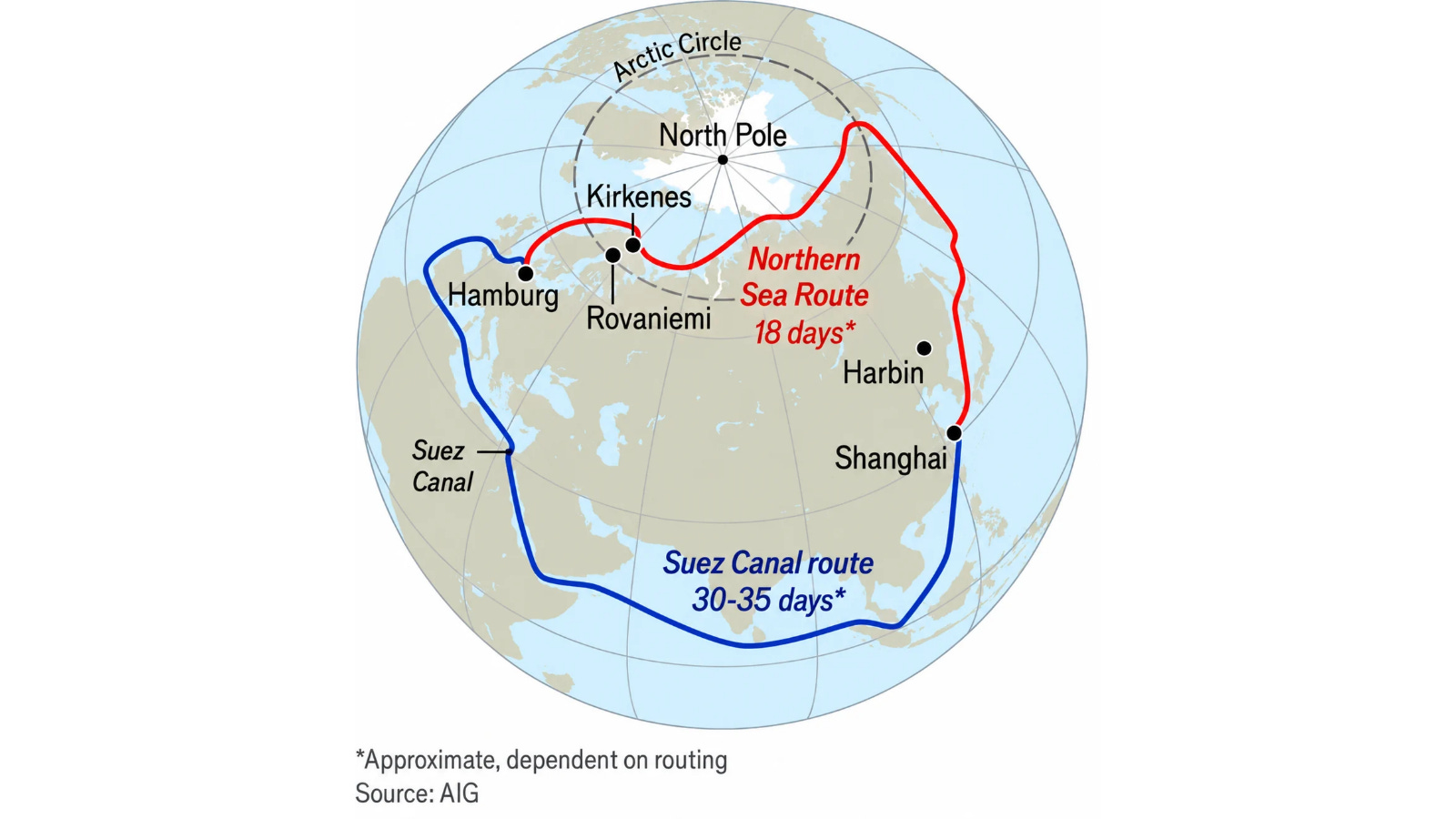
but of course there are a lot of Questions, doubts and risks about doing that in the arctic. That’s not what fascinates me though. What I find interesting is something else. how the different participants would coordinate a shipment along that route.
You would think that with all the technology we have, getting the systems along a shipping route to talk to each other would be fairly straightforward by now. But the information you need can be sitting in another company’s system, with no simple way for your own software to get it.
Someone needs to know what capacity is available, what the cargo requires, and whether the next participant can handle it. The answers may belong to different organizations, each with its own systems.
I want those systems to be able to work together well enough that people can use the information to plan a movement.
lets start at a port to explaining what I mean.
Subscribe to follow what I’m building and learning.
Give the port an interface
Let’s follow a hypothetical container of frozen fish on its way to supermarket freezers. Before it reaches its destination, it needs to change ships at a port.
We are using a refrigerated container, often called a reefer. In our example, it comes off the first ship, waits at the terminal, and goes onto the next one. The cargo needs to stay refrigerated through that whole handoff.
A missed connection means finding somewhere to keep the container refrigerated for longer. If the cargo thaws and stays warm for too long, it can spoil. We could end up delivering something the supermarket can no longer sell.
The one arranging the shipment needs to know whether the terminal has space for the refrigerated container when it gets there and can support its cooling while it waits. The terminal needs the cargo information, including what is inside, where it is going, and the temperature conditions it will need.
The onward operator also needs to know when the container will be ready to load.
Needless to say, the stakes are high.
its possible to draw the proposed journey on a map while some of those questions remain unanswered. Before committing the cargo to it, someone has to resolve them.
Now suppose the terminal could make the relevant information available through an interface that another company’s software could use.
An API, or application programming interface, is a way for software systems to interact. In this example, it could let an authorized participant ask about capacity or exchange cargo information in a form its own system can work with.
ok so what happens the first ship is delayed and the container is expected to arrive after the second ship has left. The shipment needs another connection, and the planner needs to check whether the terminal can accommodate it for the longer wait.
In the system I am describing, the revised arrival time, the terminal’s available capacity, and an onward sailing would give the planner something concrete to work with.
They could check whether the fish can wait there safely for the new connection. If the terminal cannot support that longer stay, the planner would need to resolve where the container can wait under the right conditions before confirming the revised arrangement.
Thats a practical decision the information could help with. The person arranging the shipment would still have to make it, and the operators would still have to agree to do the work.
The idea underneath it is a digital representation of the physical operation. This leads into something I have wanted to explore more: digital twins.
A digital twin represents a real thing or process in software. For the kind of system I am describing, it would need information that keeps it connected to what is happening in the operation.
Capacity changes as cargo arrives and leaves, and plans change too.
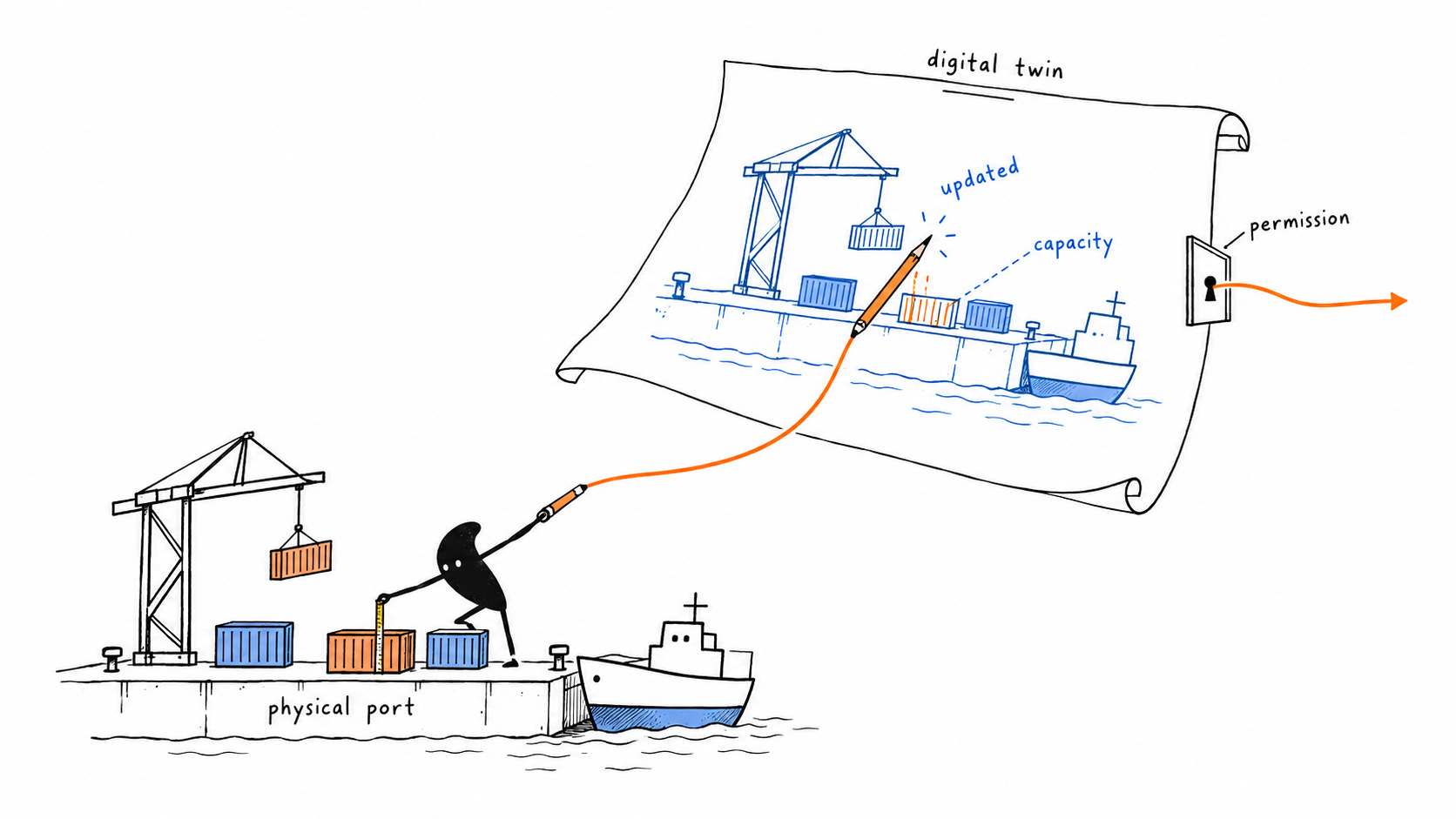
The representation needs to keep up.
The API would give another system a way to interact with the information. Building the representation, keeping it current, and deciding what someone can do through that interface are all work in their own right.
Otherwise, what we have done is given our software a very convenient way to ask for answers nobody can truly rely on.
I also want to be clear about permissions by the way. The company arranging the shipment should be able to check the availability and handling information it needs for the transfer. That does not require opening every part of the terminal’s business to everyone with an internet connection.
Who gets access, what they can see, and what they can request belong in the design from the beginning. They are part of making the connection useful to the companies involved.
Now connect the next company
Of course, our container still has somewhere to go.
A useful representation of the terminal would help with the wait between ships. The onward operator still needs to confirm that it can carry the refrigerated container on the new sailing, and the planner needs to know whether that fits the rest of the delivery.
Building Karrio got me thinking about these gaps between companies. A company can have useful information within its own network. Getting it to someone outside that network can be much harder.
If we want separate companies to coordinate a movement, their systems need some agreement about what the information means.
Take an arrival time. An estimate of when a vessel might arrive is different from a time the terminal has requested, or a time both sides have planned around. If systems treat those as interchangeable, receiving the data has not resolved the coordination problem.
There is already work on this. The Digital Container Shipping Association’s Port Call Standard provides a common API for exchanging operational information about services such as berthing, pilotage, and towage. It distinguishes estimated, requested, planned, and actual times.
For the person arranging our container’s journey, those distinctions are very important. They need to know which times are estimates and which have been agreed before they can work out whether the handoff still fits.
That is the kind of coordination I want to make easier across a route. Each company has its part of the plan and the person arranging the shipment needs to be able to put those parts together.
Making it worth joining
So far, I have described something I would like to build toward. I can see why it would be useful to the person trying to arrange a shipment.
I also have to consider the company being asked to participate.
It would need to connect its systems, maintain the information it supplies, and decide what other participants can access. There has to be a reason for it to take on that work.
And now my software problem has acquired a business problem. This is the part I am still working through.
One of the things I like about common interfaces is that they can give customers more freedom. When connecting to a service requires less work, trying another provider can become easier too.
The customer has less integration work standing between them and an alternative.
From the provider’s side, that same freedom can be uncomfortable.
If I am asking a company to help build a shared foundation, I have to take that concern seriously. Explaining that the network would work better is only part of the conversation.
The company needs to understand what participating would make possible for its own business.
I believe there is room to share more of the foundations while competing through the service built on top of them. A provider should be able to distinguish itself through how well it handles the work its customers need done.
But I have not finished working out what would persuade companies to adopt the arrangement I am describing. I do not want to skip that question just because I enjoy thinking about the software.
For the terminal handling our fish, I would want to understand whether making its refrigerated-container capacity easier to discover would help it receive suitable work.
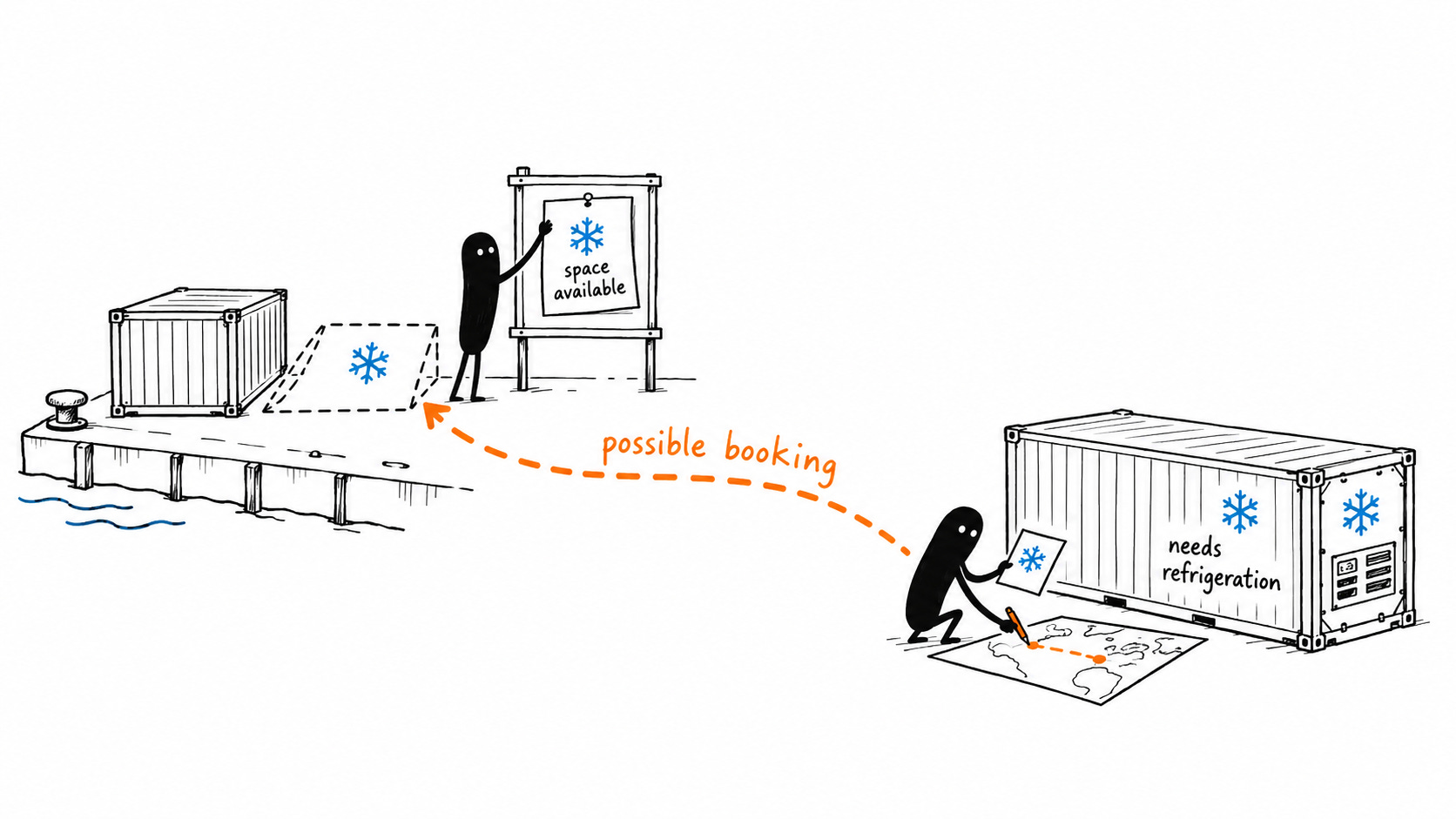
I would also want to know whether receiving updated arrival times and onward plans through the same connections would help it plan that work.
Those are questions I would want to answer with the participants themselves. Their answers would shape what is worth building, how much needs to be shared, and where to start.
The wider network I have in mind is still a proposal. The practical test is whether people can use these connections to do their work better, and whether the companies supplying them have a reason to keep doing so.
The Polar Silk Road is a much larger undertaking than the part I have explored here. Its future involves decisions about ships, infrastructure, governments, and the Arctic environment that reach far beyond my work.
The part I want to work on is making the operations along a route accessible to the systems trying to coordinate them.
I would start with a particular handoff. Establish what one participant needs to know from another, make that exchange useful, and understand why both would keep using it.
Then work outward to the next connection.
If the operators can keep working together when a ship is delayed, find a workable onward connection, and get our fish to those supermarket freezers under the right conditions, we have a connection worth building on.
-Dan
Thanks for reading, . I hope this gave you something to think about. If you’d like more, subscribe, I’d be glad to have you back.